Sydney’s skyline is iconic, its harbour breathtaking, but beneath all the glitz and glam lies a hidden truth: contamination. Think of it like this: you’re smashing through some old concrete and find something nasty lurking beneath. It might be leftover chemicals, dangerous asbestos, or even fuel that’s leaked into the soil. This stuff isn’t just gross – it can actually harm our health, wreck the environment, and make it a nightmare to build awesome new things for our city.
But hey, no stress! That’s where SCS Demolition comes in. We’re the experts at cleaning up these messy sites after we’ve knocked things down. You could say we give Sydney a good scrub after a hard day’s work. This process, called environmental remediation, is our way of making sure our city stays healthy for everyone.
Think of it as a giant clean-up after a demolition party. We use special techniques to remove or neutralise any nasty stuff left behind, like washing your hands after digging in the garden, but on a much bigger scale.
Environmental remediation isn’t just for scientists or tree-huggers. It matters to everyone in Sydney. Here’s why:
At SCS Demolition, we believe everyone deserves to live in a clean and safe city. We’re passionate about environmental remediation, and we’ve got the skills and technology to tackle even the messiest of sites.
So, stick with us as we dig deeper into this topic. We’ll uncover the different types of contamination lurking around Sydney, show you how we clean them up, and introduce you to the awesome tech that turns ‘eww’ into ‘wow’!
Picture this: A demolition crew tears down an old warehouse in Sydney, revealing a hidden world beneath the concrete slab. What they discover isn’t pretty – rusted barrels leaking strange fluids, pipes covered in a crumbly white substance, and soil stained an ominous shade of brown. This is the reality of environmental contamination, lurking beneath the surface of our vibrant city.
But what exactly is contamination, and why should it concern us? In simple terms, it’s the presence of harmful substances in the environment, like chemicals, metals, or even radioactive materials. These contaminants can have serious consequences for our health, the environment, and even the value of our properties.
One of the most common types of contamination we encounter in Sydney is soil contamination. It often stems from past industrial activities, leaky underground storage tanks, or old landfill sites. These sources leave behind a cocktail of nasty chemicals, such as heavy metals, pesticides, and petroleum hydrocarbons. This toxic brew can seep into groundwater, harm plants and animals, and even make its way into our food chain.
When contaminated soil isn’t addressed, the problem can spread deeper, reaching the groundwater. This invisible danger poses a serious threat to our drinking water supplies and ecosystems. Imagine turning on your tap and finding water that’s unsafe to drink! That’s why SCS Demolition takes groundwater contamination seriously, using advanced techniques to assess and remediate affected areas.
Remember those crumbly white pipes we mentioned earlier? They could be hiding a deadly secret – asbestos. This fibrous material was once widely used in construction, but we now know it can cause serious lung diseases like mesothelioma and lung cancer. At SCS Demolition, we have certified asbestos removal experts who safely and responsibly handle this hazardous material, protecting both our workers and the environment.
The list of potential contaminants doesn’t stop there. We’ve encountered everything from petroleum hydrocarbons from old service stations to heavy metals from manufacturing processes. Each contaminant requires a specific remediation approach, and SCS Demolition has the expertise to tailor solutions to your unique situation.
As you can see, environmental contamination is a complex issue with far-reaching consequences. But it’s not a problem without solutions. At SCS Demolition, we’re committed to uncovering these hidden dangers, protecting our community, and leaving behind a cleaner, healthier Sydney for future generations.
Imagine you’re a detective investigating a crime scene. Your mission: to uncover every hidden clue and piece together the puzzle to solve the case. That’s pretty much what environmental remediation is like, except instead of fingerprints and clues, we’re looking for contamination and figuring out the best way to clean it up.
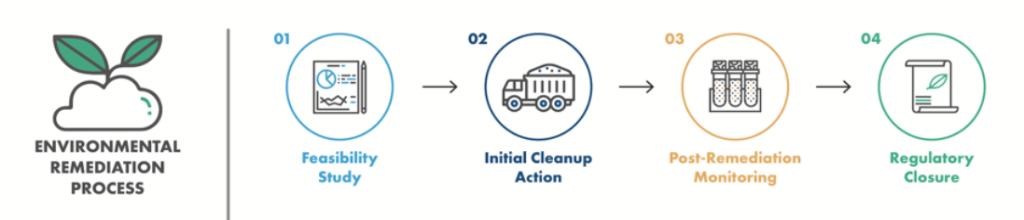
At SCS Demolition, we follow a proven four-step process to tackle even the most complex remediation projects. Think of it as our secret weapon for restoring contaminated sites to their former glory.
The first step is like gathering evidence at a crime scene. Our environmental experts conduct a thorough investigation of the site, collecting soil and water samples, and analyzing them in our high-tech lab. We’re looking for any signs of contamination, like heavy metals, asbestos, or petroleum hydrocarbons. This is where we put on our detective hats and uncover the full extent of the problem.
Once we’ve identified the contaminants, it’s time to create a game plan. This is called the Remediation Action Plan (RAP), and it outlines the specific steps we’ll take to clean up the site. Think of it like a recipe for environmental remediation. At SCS Demolition, we tailor each RAP to the unique needs of the site, considering factors like the type of contamination, the size of the area, and any regulatory requirements.
This is where the action happens! We roll up our sleeves and put our plan into action. This might involve excavating contaminated soil, treating groundwater with specialized equipment, or even using plants to absorb pollutants. It’s like a giant construction project, but instead of building something new, we’re restoring the land to its natural state.
After the remediation work is complete, we don’t just pack up and leave. We conduct a thorough validation process to make sure the cleanup was successful. This includes taking more samples and analyzing them to confirm that the contamination is gone. We also monitor the site over time to ensure it stays clean and healthy. Think of it like a final checkup at the doctor’s office.
At SCS Demolition, we’re committed to doing the job right the first time. Our rigorous four-step process ensures that contaminated sites are thoroughly cleaned and restored to their full potential. Whether it’s a small residential property or a large industrial site, we have the expertise and experience to handle any environmental remediation project.
| Technology | Description | Advantages | Disadvantages |
| Bioremediation | Uses microorganisms to degrade contaminants | Environmentally friendly | Slow process |
| Phytoremediation | Plants absorb contaminants from soil/water | Aesthetic value | Limited to certain contaminants |
| Pump and Treat | Groundwater extraction and treatment | Effective for groundwater | Energy-intensive |
| Soil Vapor Extraction | Removes volatile contaminants from soil | Fast results | Limited to shallow depths |
| In Situ Chemical Oxidation | Injects oxidants into contaminated areas | Rapid contaminant breakdown | High cost |
| Thermal Desorption | Heats soil to vaporize contaminants | Treats wide range of contaminants | Energy-intensive |
| Electrokinetics | Applies electric fields to move contaminants | Can treat deep contamination | Requires electricity supply |
| Nanoremediation | Uses nanoparticles to degrade pollutants | Highly effective at small scales | Long-term effects unknown |
| Permeable Reactive Barriers | Underground barriers treat contaminants | Passive treatment method | Maintenance required |
Imagine trying to clean up a spilled drink with just a paper towel. It might work for a small spill, but what if you knocked over a whole jug of juice? You’d need some serious cleaning power! Environmental remediation is kind of like that. Sometimes, we need more than a shovel and a bucket to get the job done.
That’s where remediation technologies come in – they’re like our high-tech cleaning tools for the environment. At SCS Demolition, we have a whole toolbox full of these innovative solutions, each designed to tackle different types of contamination.
Ever heard of bacteria and fungi that eat pollution for breakfast? That’s basically what bioremediation is all about! We introduce these tiny organisms to contaminated soil or groundwater, and they munch away on the harmful substances, breaking them down into harmless byproducts. It’s like having a microscopic army of cleaners working around the clock!
Sometimes, the easiest way to deal with contamination is to simply dig it up and take it away. This is called excavation and disposal, and it’s a common method for dealing with heavily contaminated soil. At SCS Demolition, we carefully excavate the contaminated soil and transport it to a special facility where it’s treated or disposed of safely. Think of it like taking out the trash, but on a much bigger scale!
Have you ever used a vacuum cleaner to suck up dust and dirt? Soil vapor extraction (SVE) is kind of like that, but instead of cleaning your carpet, we’re cleaning the soil. We use special equipment to create a vacuum that pulls contaminated vapors out of the ground. These vapors are then treated to remove the harmful substances, leaving the soil clean and healthy.
Imagine a superhero with the power to neutralize harmful substances. That’s kind of what in situ chemical oxidation (ISCO) does. We inject special chemicals into the ground that react with the contaminants, breaking them down into harmless substances. It’s like a chemical reaction that destroys pollution, right there in the soil!
At SCS Demolition, we have a whole arsenal of remediation technologies at our disposal. We might use phytoremediation, where we plant special trees or plants that naturally absorb pollutants from the soil. Or we might use a pump-and-treat system to clean up contaminated groundwater. The right tool for the job depends on the specific type of contamination and the unique characteristics of the site.
No matter what the challenge, SCS Demolition has the expertise and technology to find the right solution. We’re committed to using the latest and greatest remediation technologies to clean up contaminated sites quickly, efficiently, and effectively. So, if you’ve got a messy site that needs some TLC, give us a call. We’ll bring out our toolbox and get to work!
Ever heard the saying, “Rules are made to be broken”? Well, in the world of environmental remediation, that’s definitely not the case! There’s a whole set of rules and regulations in Sydney that we need to follow to make sure demolition and cleanup projects are done safely and responsibly. Think of it like a game of footy – you gotta play by the rules to make it fair and fun for everyone.
First up, we’ve got the NSW Environment Protection Authority (EPA). They’re like the referees of environmental protection, setting the standards and guidelines that all remediation projects need to follow. These rules cover everything from how we investigate contamination to the methods we use to clean it up. At SCS Demolition, we know the EPA’s rulebook inside and out, so you can be confident we’re always playing by the book.
On top of the EPA’s guidelines, each local council in Sydney might have its own set of rules. Think of it like different footy teams having slightly different rules for their home ground. These rules might cover things like noise restrictions, dust control, and how we manage waste during a demolition project. It’s like a mini-playbook that we need to follow to make sure our projects are a win for everyone in the community.
You might be wondering, “Why so many rules?” Well, it’s all about protecting people and the environment. The rules are designed to make sure that remediation projects are done safely, without causing any harm to the community or the surrounding ecosystem. They also ensure that contaminated sites are cleaned up properly, so they can be safely used for future development. It’s like having a set of safety guidelines to make sure everyone can enjoy the game without getting hurt.
At SCS Demolition, we take regulatory compliance seriously. We have a dedicated team of experts who keep up-to-date on all the latest rules and regulations. This means you can trust us to handle your project with the utmost care and professionalism, ensuring that it meets all the necessary requirements. We’re not just demolition experts, we’re environmental champions, working hard to protect our city and the planet.
Imagine you’re putting together a band. You wouldn’t just pick anyone off the street, right? You’d want talented musicians who know their instruments, have experience playing together, and can rock out like nobody’s business. Choosing a remediation contractor is kinda like that. You need a team with the right qualifications, a proven track record, and a price tag that fits your budget.
Just like you wouldn’t trust your guitar to someone who’s never played a chord, you shouldn’t trust your environmental cleanup to just anyone. At SCS Demolition, our team is made up of certified professionals who know the ins and outs of remediation like the back of their hand. They’ve got the training, experience, and expertise to handle any contamination challenge that comes their way.
We’ve got a whole catalog of successful remediation projects under our belt. From cleaning up former industrial sites to transforming contaminated land into thriving parks, we’ve seen it all. Check out our website to see some of our greatest hits – real-world examples of how we’ve helped clients just like you tackle environmental challenges.
Let’s be real, remediation isn’t cheap. But just like you wouldn’t want to overpay for a concert ticket, you don’t want to break the bank on your cleanup project. The cost of remediation can vary depending on several factors, like the size of the site, the type of contamination, and the complexity of the cleanup process. That’s why it’s important to get multiple quotes from different contractors and compare their services and prices.
At SCS Demolition, we believe in transparency and honesty. We’ll provide you with a detailed quote that outlines all the costs involved, so you know exactly what you’re paying for. We’ll also work with you to find the most cost-effective solutions for your specific needs.
Choosing the right remediation contractor is a big decision, but it doesn’t have to be a stressful one. At SCS Demolition, we’re committed to making the process as easy and transparent as possible. We’ll guide you through every step of the way, from the initial assessment to the final sign-off, ensuring your project is a success from start to finish.
Talk is cheap, right? You want to see action, not just promises. So, let’s dive into a couple of real-life examples that show how SCS Demolition has transformed contaminated sites into thriving spaces right here in Sydney.
Case Study 1: Bringing New Life to an Old Industrial Site
Imagine a sprawling industrial site, abandoned for years, with rusty machinery and stained soil. That was the scene we encountered at a former chemical plant in western Sydney. The soil was contaminated with heavy metals and other nasty chemicals, making it unsafe for any kind of development.
But SCS Demolition didn’t back down. We got to work, carefully excavating the contaminated soil and treating it using a combination of methods. We also implemented a groundwater treatment system to prevent the pollution from spreading. The result? A clean and safe site that’s now home to a vibrant community park.
Case Study 2: A Breath of Fresh Air for a Former Gasworks
In the heart of Sydney, an old gasworks site had been sitting vacant for decades, a stark reminder of the city’s industrial past. The soil was contaminated with a cocktail of chemicals, including coal tar and benzene. This made it a no-go zone for any kind of development, and it was a blight on the surrounding neighborhood.
But SCS Demolition saw an opportunity to transform this eyesore into something beautiful. We used a combination of excavation and in-situ treatment techniques to remove the contamination and restore the soil. The result? A stunning new residential development that’s brought new life and energy to the area.
These are just two examples of how SCS Demolition has made a real difference in Sydney. Our remediation projects don’t just clean up contaminated sites – they create opportunities for new development, improve the health of our communities, and protect our environment for future generations. It’s about more than just digging up dirt, it’s about building a better future for our city.
We’re proud of the work we do, and we’re always looking for new challenges. If you’ve got a contaminated site that needs some TLC, give us a call. We’ll roll up our sleeves, put our expertise to work, and transform your site into something you can be proud of.
Sydney’s story isn’t just about the Opera House and Harbour Bridge. It’s also about the hidden dangers lurking beneath the surface. We’ve journeyed together through the complex world of contamination, exploring the threats it poses to our health, our homes, and our future. But we haven’t just uncovered problems – we’ve discovered solutions!
From bioremediation’s tiny clean-up crew to the heavy-duty excavation that removes harmful substances, cutting-edge technologies are turning contaminated sites into spaces we can be proud of. We’ve seen real-life examples of SCS Demolition’s expertise, turning eyesores into thriving parks and vibrant communities.
So, what’s next? If your property has a hidden past, don’t let contamination hold you back. At SCS Demolition, we’re the experts in not only knocking things down but also building a cleaner, brighter future for Sydney.
Ready to unlock the potential of your land? Contact us today and let’s turn your contaminated site into a success story.
Brace yourself – cleaning up contaminated land in Sydney isn’t cheap! The price tag can vary wildly, from tens of thousands to millions of dollars. It all depends on:
For example, a recent toxic site cleanup near Parramatta cost a whopping $116 million ! That’s enough to buy over 200 average Sydney homes. While most projects won’t break the bank quite that badly, be prepared to shell out some serious cash to get the job done right.
Buckle up, because environmental cleanup is more of a marathon than a sprint! The timeline can vary from a few months for simple jobs to several years for complex sites. That $116 million cleanup near Parramatta? It took 7 whole years to complete.
The process involves lots of steps:
It’s kind of like giving the earth a deep clean – it takes time, but the results are worth it for a healthier environment.
Don’t panic, but also don’t ignore it! If you discover your land is contaminated, you have a legal duty to report it to the NSW Environment Protection Authority (EPA). Failing to report could land you in hot water with fines up to $165,000, plus an extra $77,000 for each day you keep it secret!
Here’s what happens next:
Remember, it’s better to deal with contamination head-on than to let it become a bigger (and more expensive) problem down the road.
Good news – you might not have to foot the entire bill yourself! While there’s no guarantee, various grants and funding programs exist to help with environmental cleanup. For example:
It never hurts to check what financial help might be available – you could save some serious cash!
While there aren’t specific tax breaks just for remediation in Australia, cleaning up your land could indirectly lead to some tax benefits:
It’s always a good idea to chat with a tax pro to see how remediation might affect your specific situation.
Great question – you definitely want to make sure the job’s done right! Here’s how to ensure your cleanup is top-notch:
By following the rules and working with SCS Environmental Remediation experts, you can rest easy knowing your land is getting the five-star treatment it deserves!
A: Environmental remediation involves the removal of pollutants or contaminants from environmental media such as soil, groundwater, sediment, or surface water. It is essential to ensure the protection of human health, environmental quality, and adherence to regulatory guidelines. Effective remediation efforts help to restore contaminated sites for safe re-use.
A: The EPA provides comprehensive guidelines for the remediation of hazardous waste which include identification, assessment, and selection of appropriate remedial actions. These guidelines also emphasise the importance of protecting human health and the environment during and after the cleanup process.
A: Common cleanup methods include soil remediation techniques like excavation and thermal desorption, groundwater remediation approaches like pump and treat, and sediment remediation methods such as dredging. The choice of method depends on the type and extent of contamination as well as site-specific conditions.
A: Pollutants can adversely affect human health by causing a range of health issues, from respiratory problems to more severe conditions like cancers or neurological damage. Therefore, eliminating or reducing exposure to these hazards through effective remediation is crucial.
A: The Department of Energy oversees the cleanup of contaminated facilities and lands under its jurisdiction. This includes managing remediation activities, ensuring compliance with environmental regulations, and reducing the legacy of hazardous materials and waste.
A: Groundwater remediation methods include techniques such as pump and treat, in-situ chemical oxidation, bioremediation, and reactive barriers. Each method is chosen based on the specific contaminants present, site conditions, and the overall feasibility of the approach.
A: Thermal desorption is a soil remediation technique where heat is applied to contaminated soil to vaporise volatile contaminants, which are then captured and treated. This method is effective for remediating soils contaminated with hazardous organic compounds.
A: Predicting cleanup costs can be challenging due to factors such as the complexity of contamination, variability in site conditions, uncertainties in remediation methods’ effectiveness, and regulatory requirements. Accurate cost estimation often requires thorough site investigation and feasibility studies.
A: Environmental consultants provide expertise in site assessment, developing and implementing remediation plans, and navigating regulatory requirements. Their remediation experience and knowledge of environmental science ensure that cleanup efforts are thorough, effective, and compliant with relevant guidelines.
A: The Federal Remediation Technologies Roundtable (FRTR) plays a key role in promoting the exchange of information regarding innovative remediation technologies. It facilitates the collaboration between federal agencies to improve the methods used to remediate contaminated sites, enhancing the overall efficiency and effectiveness of site remediation efforts.
Here is a list of relevant links related to environmental remediation in New South Wales, Australia: